Deceive Inc.
I was brought on to be a community tester for Deceive Inc. because of my advocacy for greater accessibility in the game’s settings by appealing directly to the developers. I had many great one-on-one conversations with designers and developers alike, and when a community testing team was created, I was one of the first invited. In my year as a tester, I filed over 200 bug reports and oversaw a number of large-scale changes to the game.
My first contribution to the game was in getting the package scan overlay changed. As a visually impaired player, I struggled significantly to use the package, which scanned for other nearby players at the cost of intel. I couldn’t see them because they blended in with the background too much. This led to a change in VFX with a much more visible ping on nearby players; later down the line, the contrast issues with this overlay became clear, and I advocated for another change that corrected this as well.
My largest contribution to the game was in reviewing the game’s playability from a controller perspective. I was the only controller tester on the team, and I constantly advocated for better aim assist and overall usability on controller. The game’s original aim assist was very rudimentary and often detrimental to the player: there was no boost while turning, certain limbs and enemy gadgets were not considered targets for aim assist, NPCs were prioritized over enemies, and so on. I was able to get all of these things changed, and I had so many fellow controller players who told me they would not have been able to keep playing had I not kept fighting for a better, fairer aim assist in the game.
I additionally helped change a number of problematic VFX that were both health hazards and fairness issues. Certain expertises washed the screen in red flashes, which made it impossible to see as a victim and created an easy win for the user of the expertise—not to mention being a photosensitivity issue overall. Others were so red that the user of the expertise outright could not see who they were aiming at on the screen, which was an issue in and of itself. Aim punch was a very unpopular part of the game for a long time and caused motion sickness in many players (as well as disproportionately creating an unfair advantage for already strong weapons), and I was able to help advocate for its removal.
Lastly, I rewrote all of the expertise and passive descriptions in the game, but they sadly never made it into the live version, as the developers shut down before the change could be made. One of the biggest problems players old and new faced was a lack of in-game information: concrete numbers were specified nowhere in game, only in patch notes, and many vague phrasings made agents’ powers and passives unclear in terms of how they were supposed to be used. My rewrites sought to correct this with up-to-date, correct, and exact cooldowns, timings, and so on for how each expertise and passive worked.
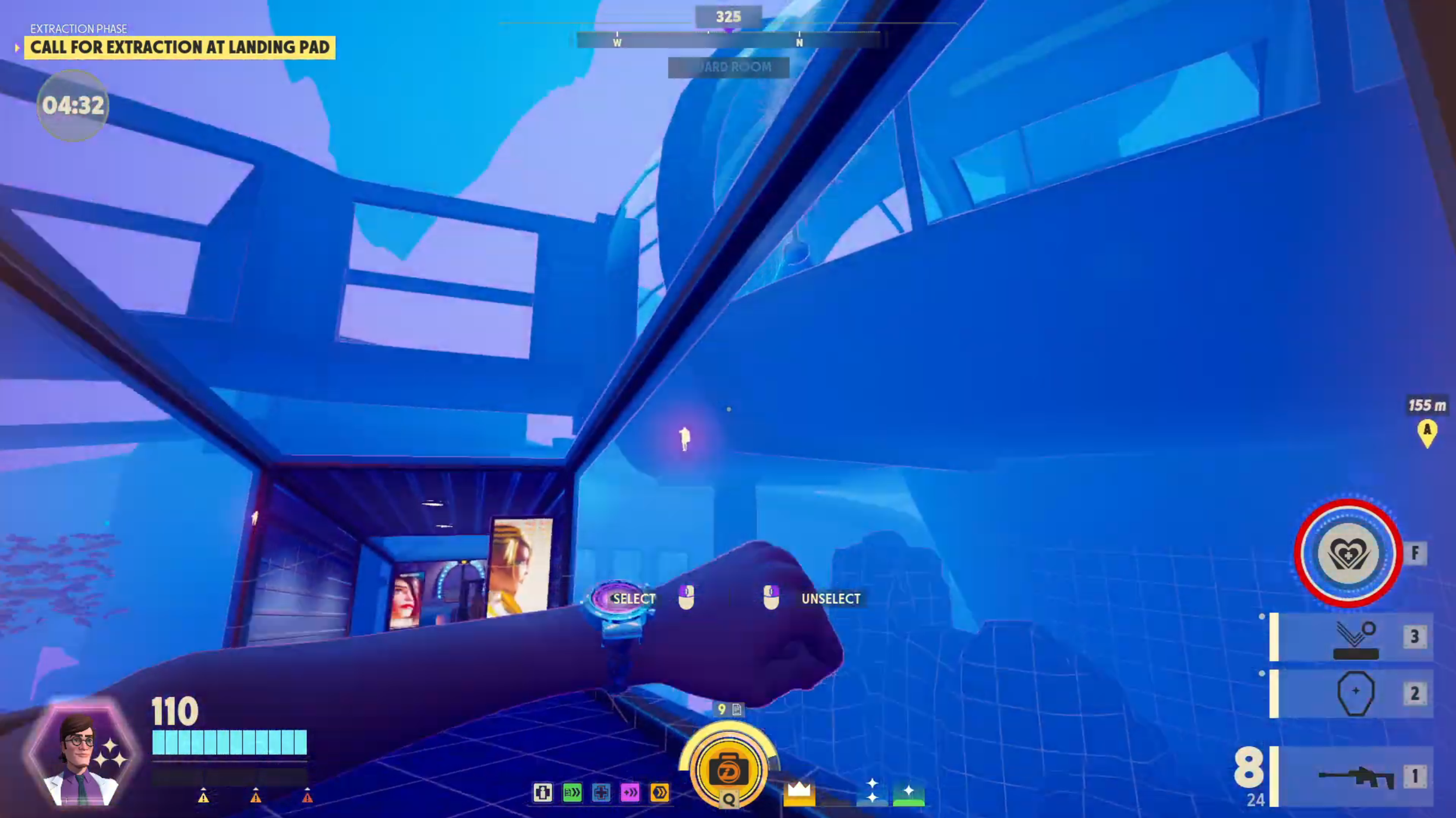
First version of the package scan, launch - June 2023. Agent silhouettes blended into the background and were very easy to miss.
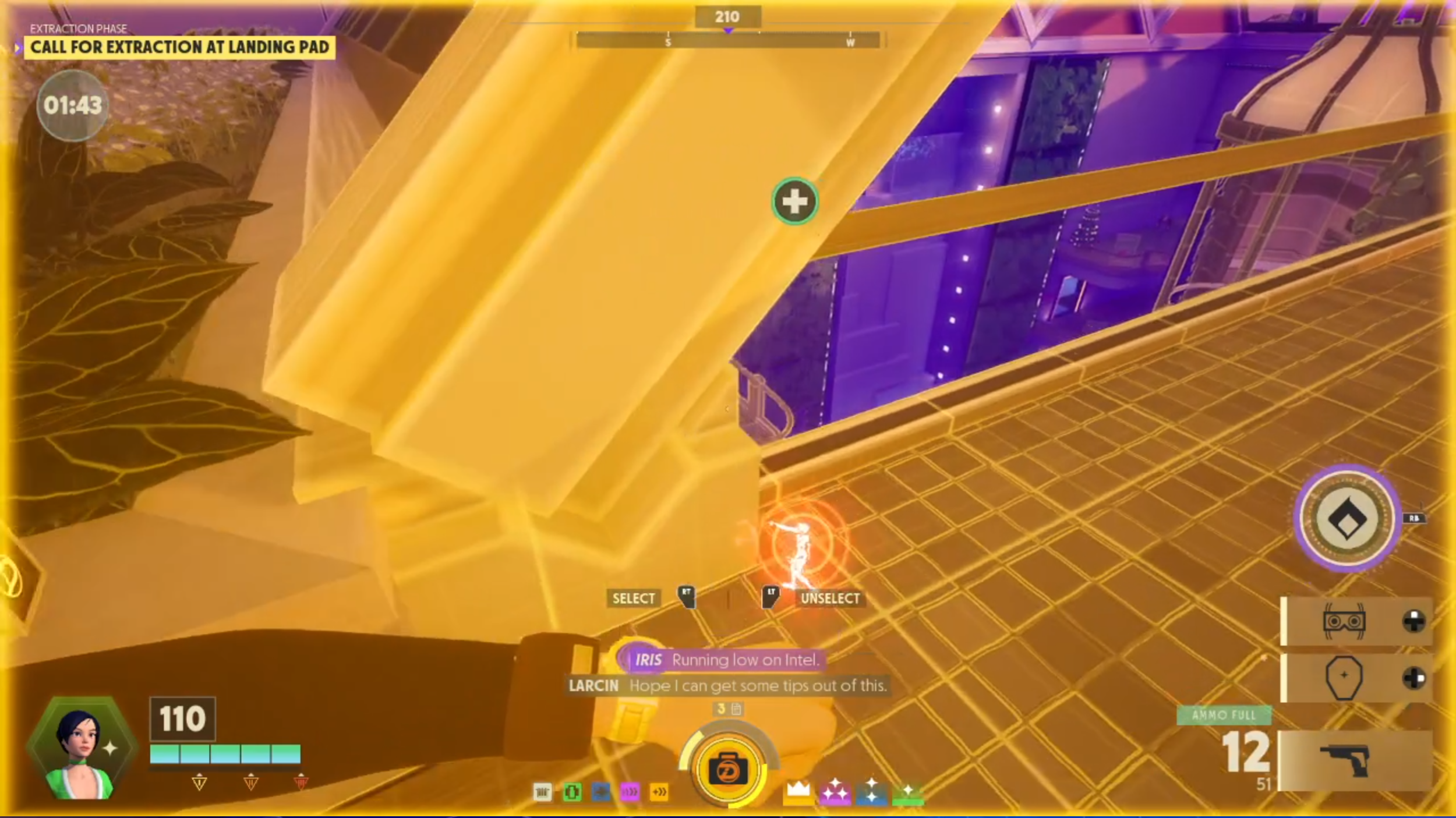
Second version of the package scan, June 2023 - November 2024. Agents now had a circle around their silhouettes so they stood out at farther distances. Overlay was saturated deeply yellow, which caused some contrast issues.
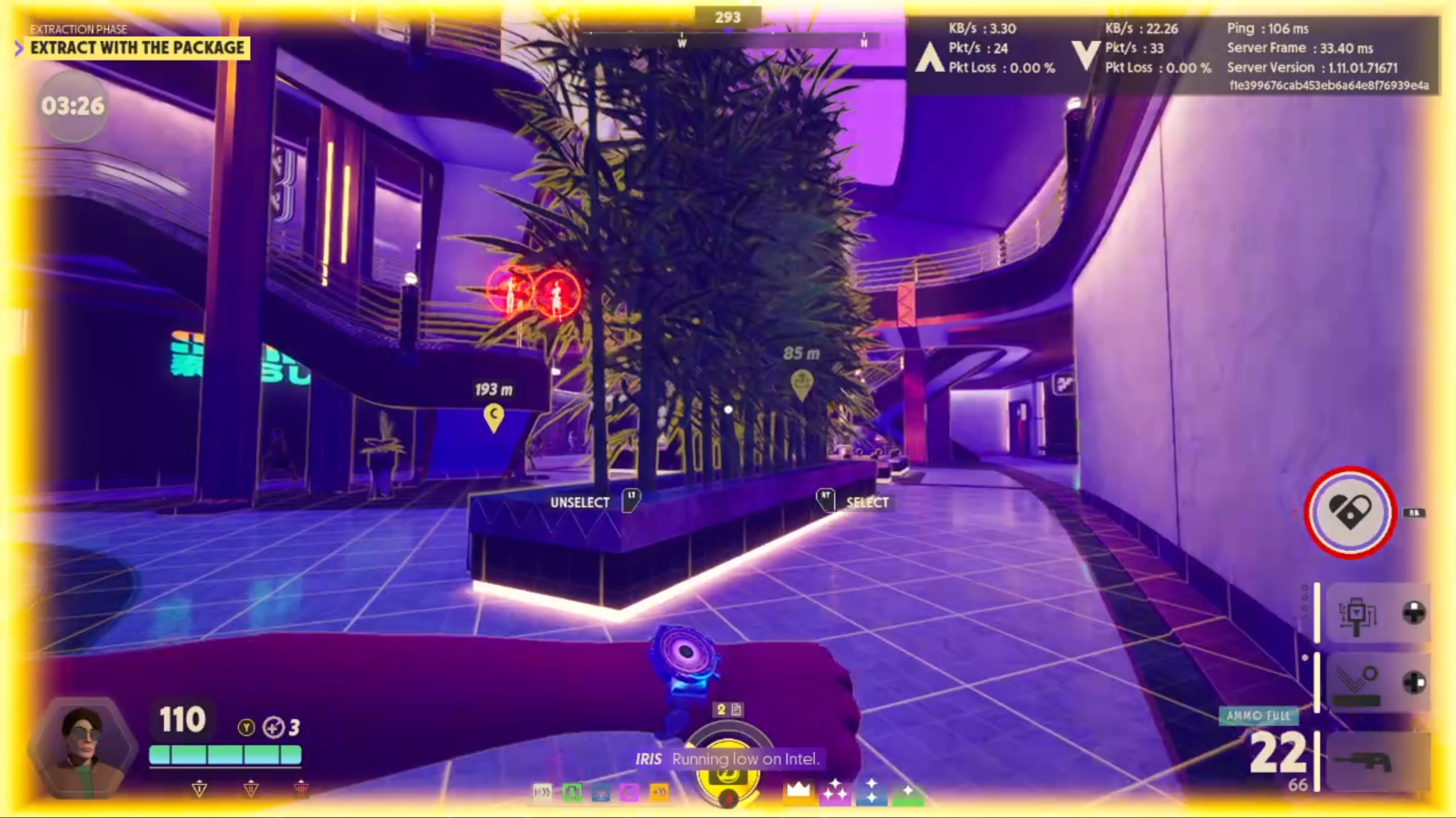
Third iteration of the package scan, November 2024 - present. Yellow saturation was removed, creating much better visibility and contrast between scanned agents and their backgrounds. Ping circles around scanned agents remained.
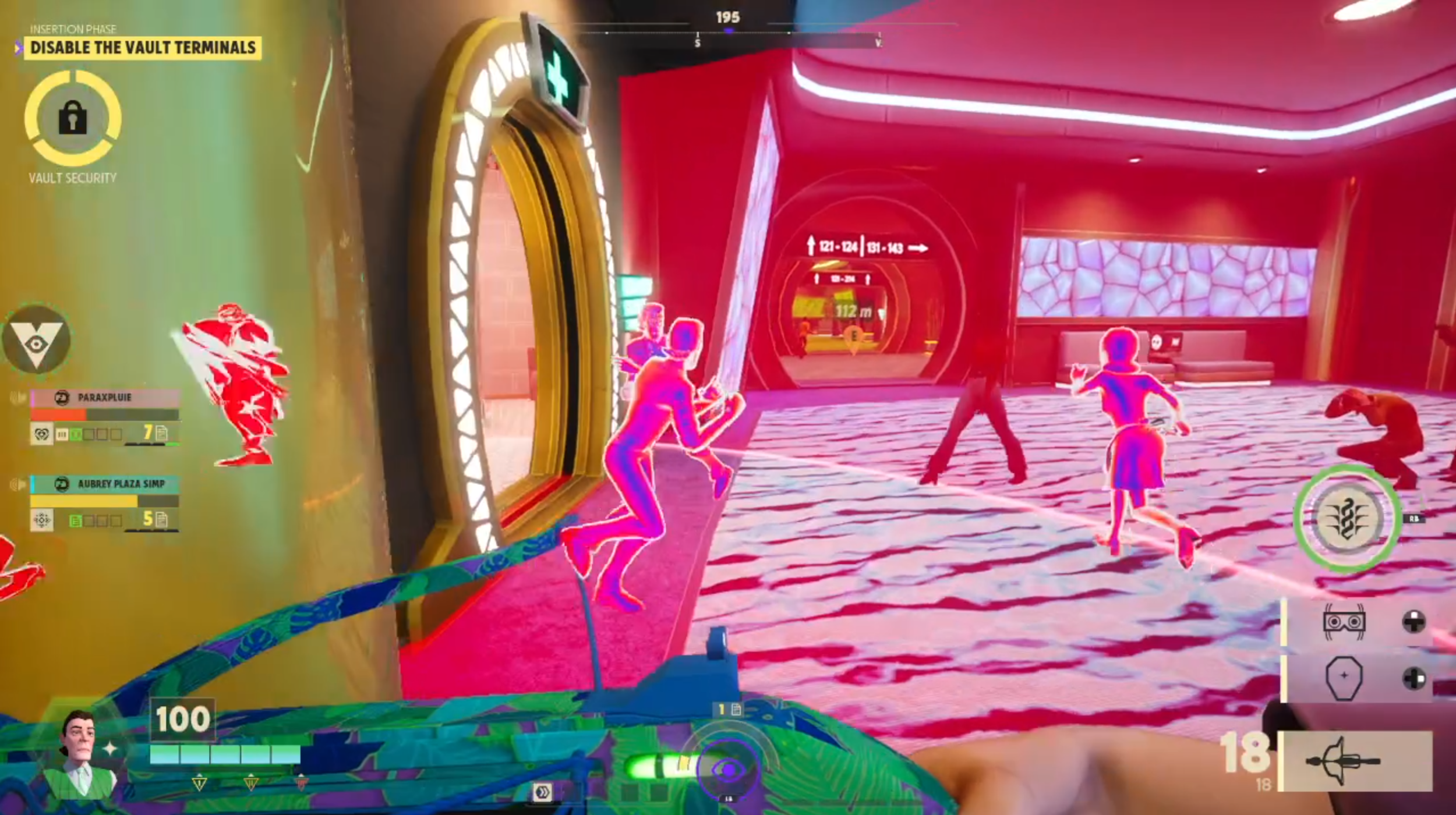
Ace's original VFX for her "Big Blind" expertise. It made the entire screen so red that you could not distinguish between enemy players and NPCs, as well as being too bright to look at in general.
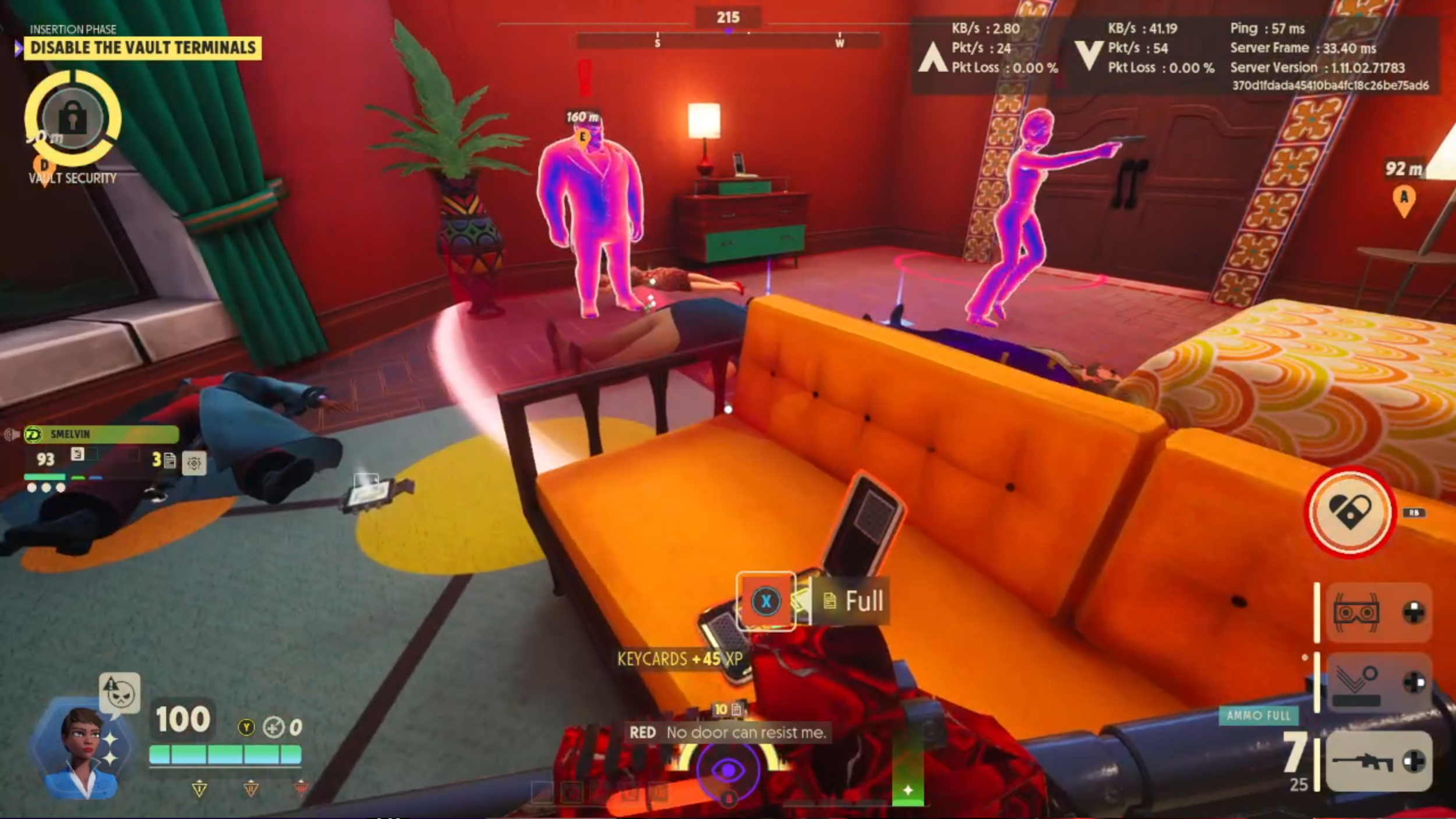
Final version of Ace's Big Blind. The walls of the zone are transparent to allow for much clearer viewing of the NPCs/players in the zone. The zone being less of a saturated red is also visually easier on the eyes.
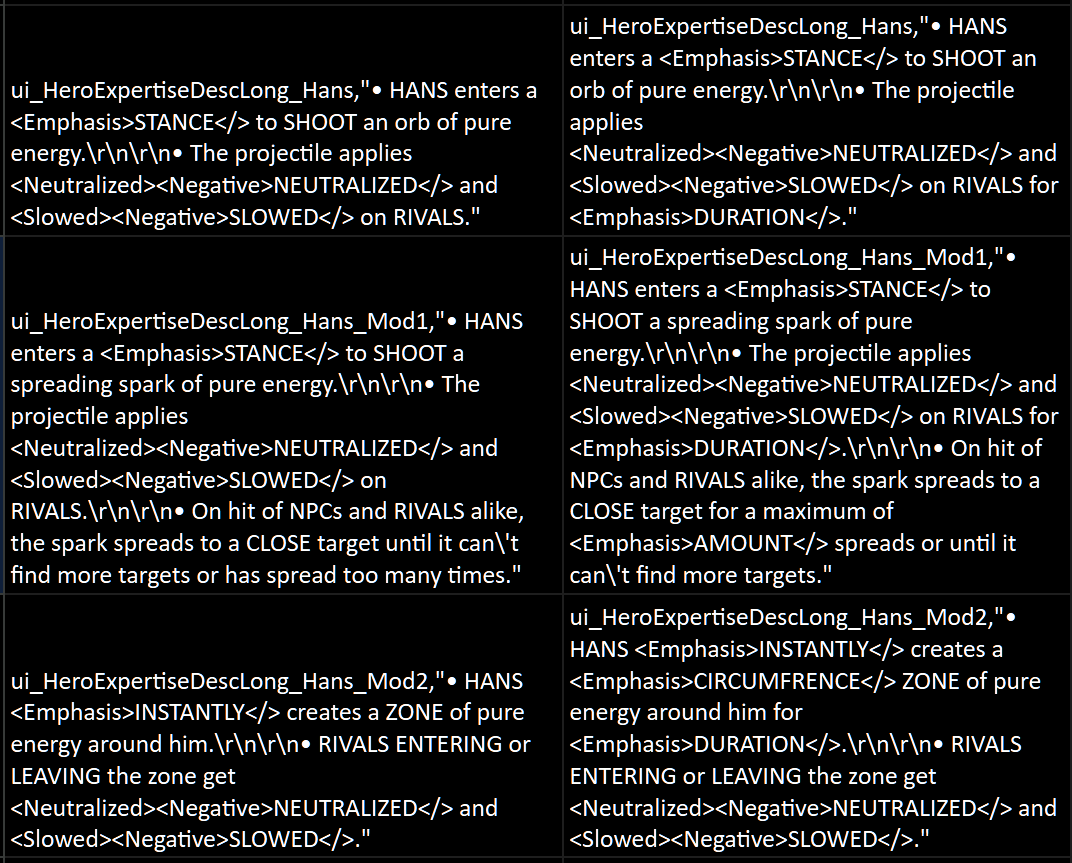
My rewritten expertise descriptions for Hans on the right; originals on the left. I left spaces for values like duration and amount for the developers to link values on a balancing table in Unreal that did not yet exist.